Over 25 years of machine vision expertise
From CMOS sensors to specialized imaging technologies
For over 25 years, Photonfocus has been developing CMOS sensors, industrial cameras, and specialized imaging technologies for industrial applications. This expertise forms the foundation for innovations in the fields of HDR imaging, high-speed imaging, laser triangulation, SWIR, hyperspectral imaging, and embedded vision. Choosing the right sensor, camera, and imaging technology is crucial to the performance of an image processing solution.
Our experts help OEMs and integrators evaluate technical requirements and select the optimal technology for their application.
Contact expertsCMOS sensor technology
The foundation of modern image processing
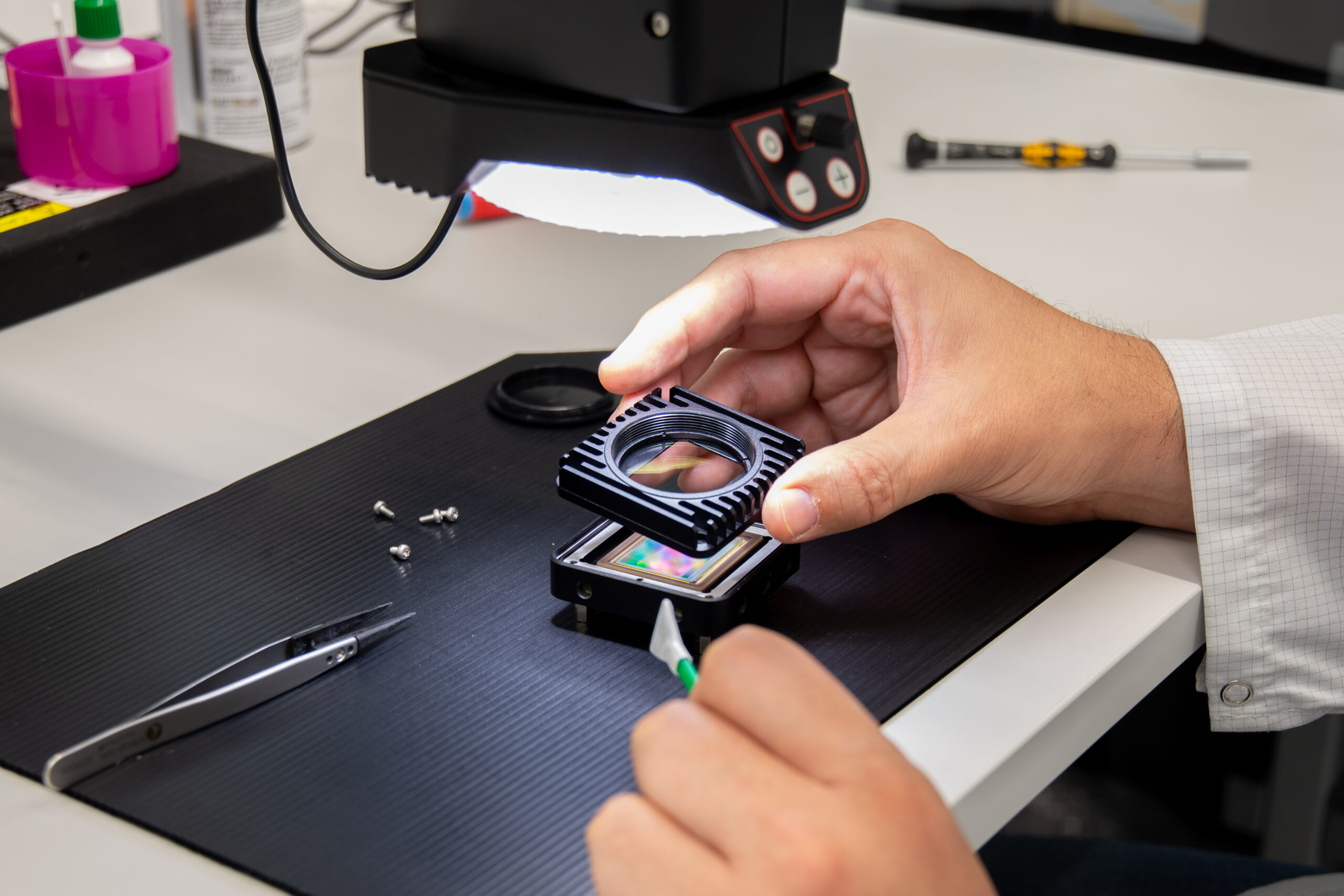
CMOS sensors are at the heart of modern image processing systems. Photonfocus is one of the pioneers in industrial CMOS sensor development and has been designing sensor architectures for demanding image processing tasks for more than 25 years. The resulting technologies enable distortion-free global-shutter imaging, high dynamic ranges, high frame rates, and exceptional sensitivity from the UV range into the near-infrared. This expertise forms the foundation for numerous Photonfocus innovations such as LinLog® HDR, Double Rate, and spectral imaging.
HDR imaging (LinLog®)
Capturing large differences in brightness in a single shot
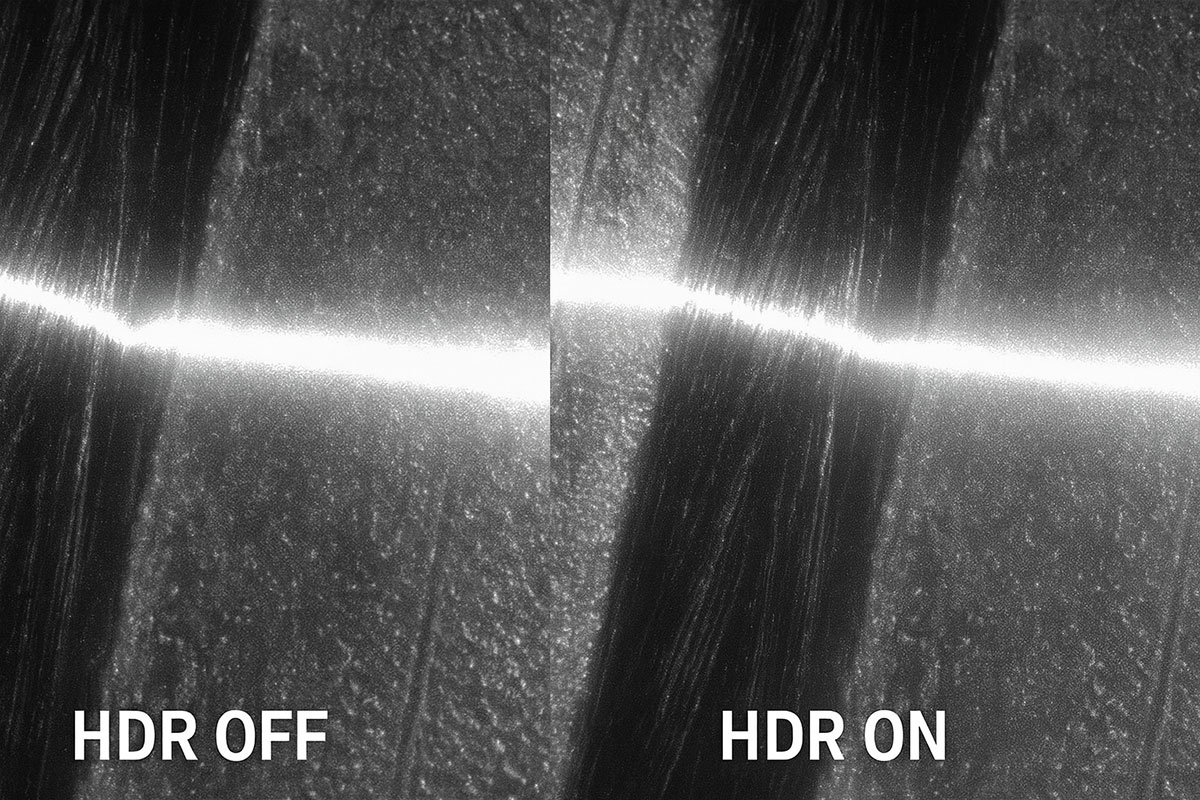
Many industrial applications contain both very bright and very dark areas of an image. Conventional sensors reach their dynamic range limits in such situations, which can result in the loss of image information in bright or dark areas.
The LinLog® technology developed by Photonfocus combines linear and logarithmic signal processing directly within the sensor. This significantly expands the dynamic range and ensures that relevant image information is preserved even under extreme contrast conditions. This enables reliable image analysis in situations where standard cameras reach their limits.
Typical applications include laser triangulation, weld seam inspection, electronics manufacturing, and the inspection of highly reflective surfaces.
Double rate technology
Higher frame rates for high-speed imaging
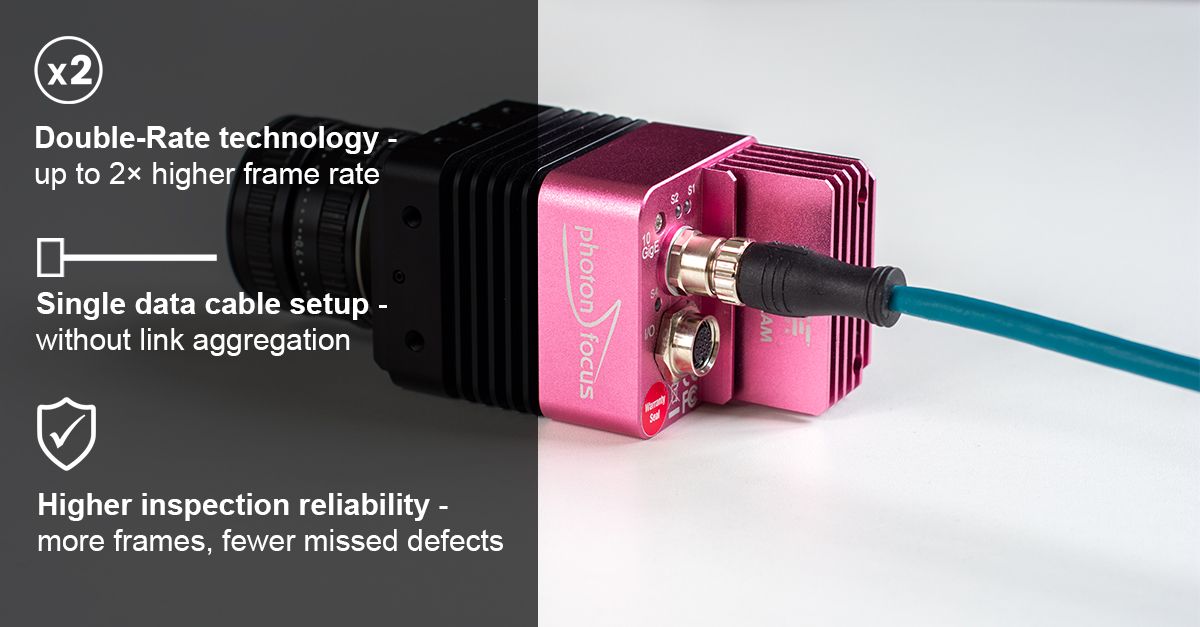
In many image processing tasks, the frame rate determines the achievable processing speed. Photonfocus’s Double-Rate technology increases the sensor’s readout speed through parallel readout paths, thereby enabling significantly higher frame rates —without the need for additional data connections or complex system architectures.
More images. Fewer overlooked defects.
The higher frame rate allows for more images per unit of time and reduces the risk of overlooking relevant events or defects. At the same time, high transmission speeds are achieved over a single data connection, thereby reducing integration effort and system complexity. Even at high production speeds, fine details remain visible without reducing the resolution or using additional cameras.
3D imaging
Precise 3D data for industrial measurement and inspection tasks
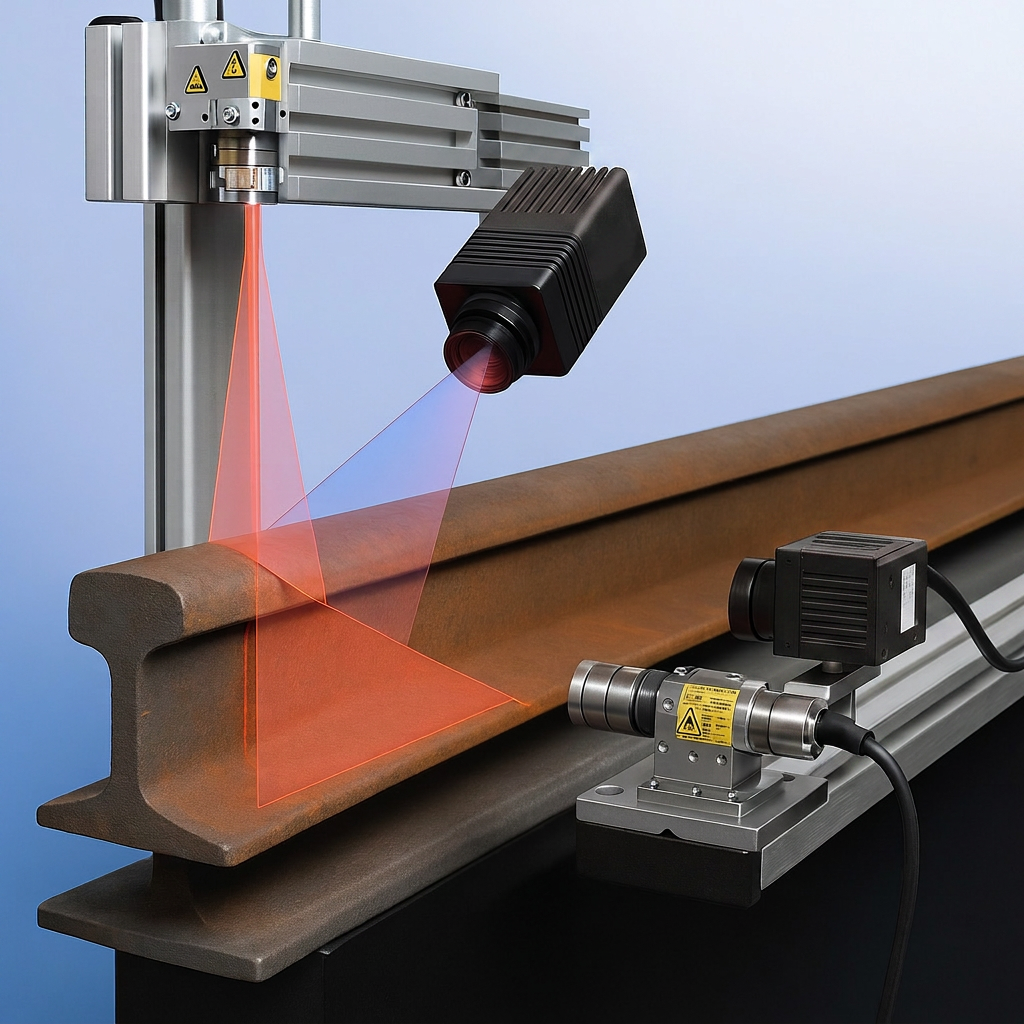
Many quality characteristics cannot be reliably captured using two-dimensional images alone. 3D cameras enable the precise measurement of height profiles, geometries, edges, and surface structures, and provide additional information for quality control and process monitoring.
Photonfocus develops camera solutions for demanding 3D applications and combines high-resolution CMOS sensors, HDR technologies, and real-time processing to deliver precise and reliable measurement results—even on reflective or low-contrast surfaces.
Learn more about 3D camerasSpectral imaging
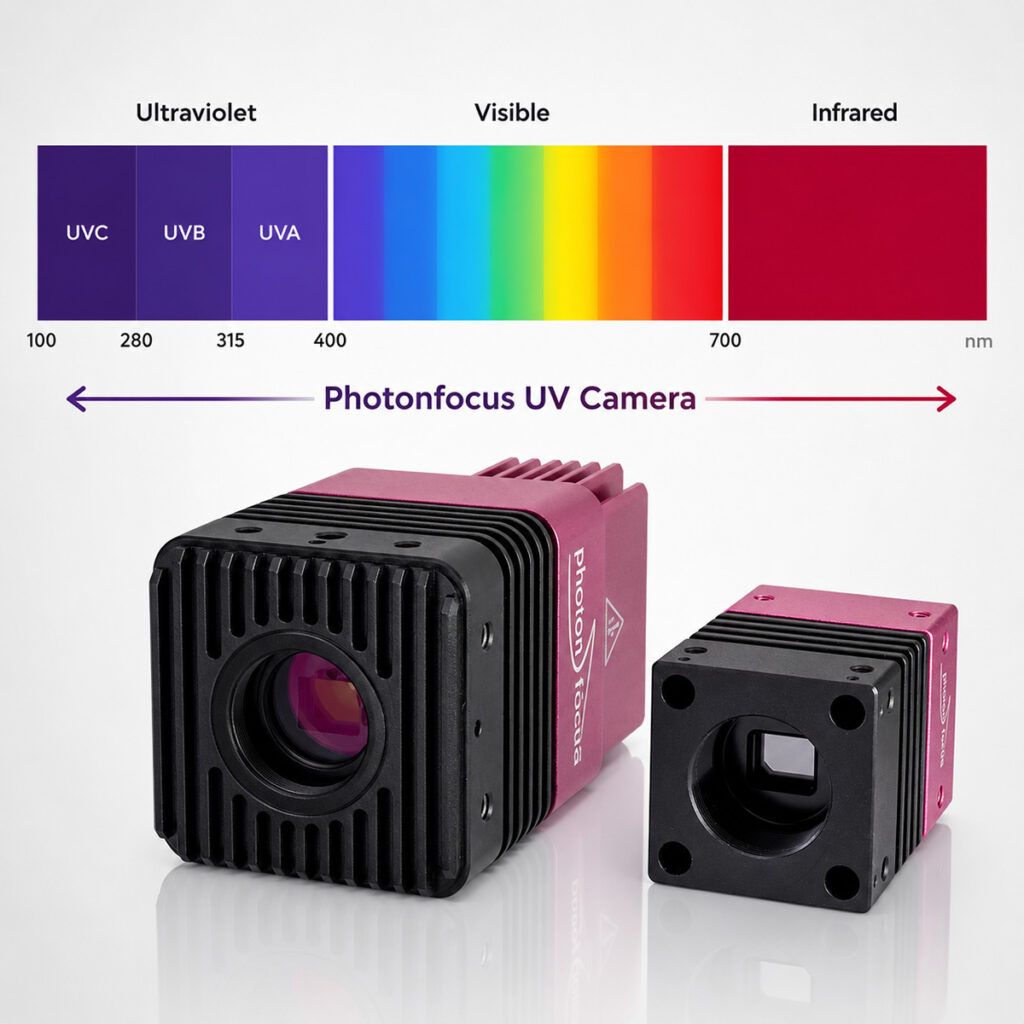
More information through the right spectrum
Not all relevant information is visible in visible light. Photonfocus has extensive expertise in the relevant spectral ranges of industrial imaging—from UV through visible light to NIR and SWIR.
By selecting the appropriate sensor technology, it is possible to capture additional image information that remains hidden in the visible spectrum. This reveals material differences, moisture, coatings, surface defects, and hidden structures that can only be detected to a limited extent using conventional imaging.
This opens up new possibilities for quality control, material analysis, and process monitoring in industrial applications.
Learn more about SWIR/UV camerasOptical and metrological methods
When imaging becomes a measurement technique
The combination of sensor development, optics, and image processing enables highly precise measurement methods for industrial applications.
Scheimpflug imaging
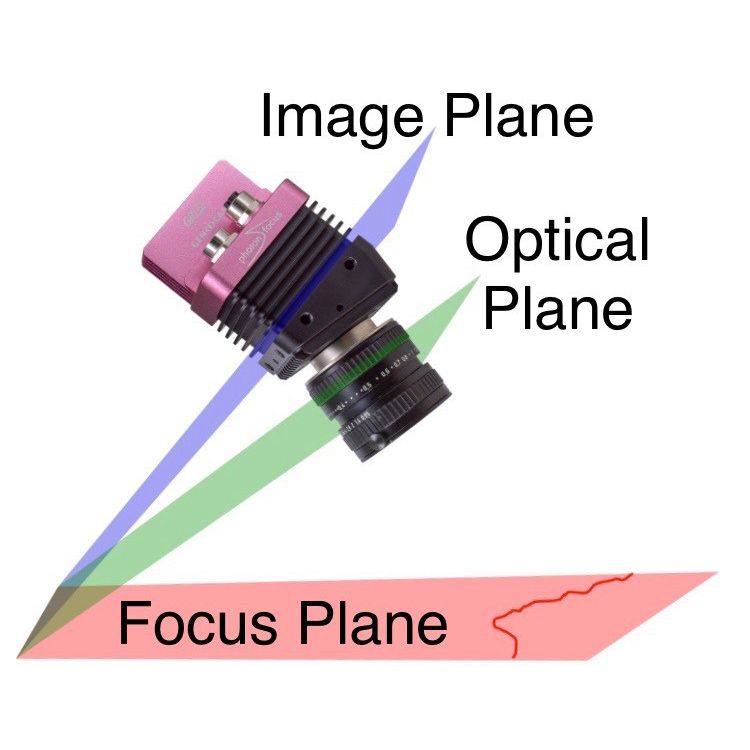
Scheimpflug technology enables consistently sharp imaging of tilted objects and measurement lines across large depth ranges. Through the precise alignment of the object, lens, and image planes (focus plane, optical plane, and image plane), the plane of focus is adapted to the geometry of the object. This allows even slanted surfaces, edges, and profiles—which conventional cameras would only partially bring into focus—to be captured with precision. This makes Scheimpflug imaging an important method for measurement and inspection tasks.
Laser triangulation
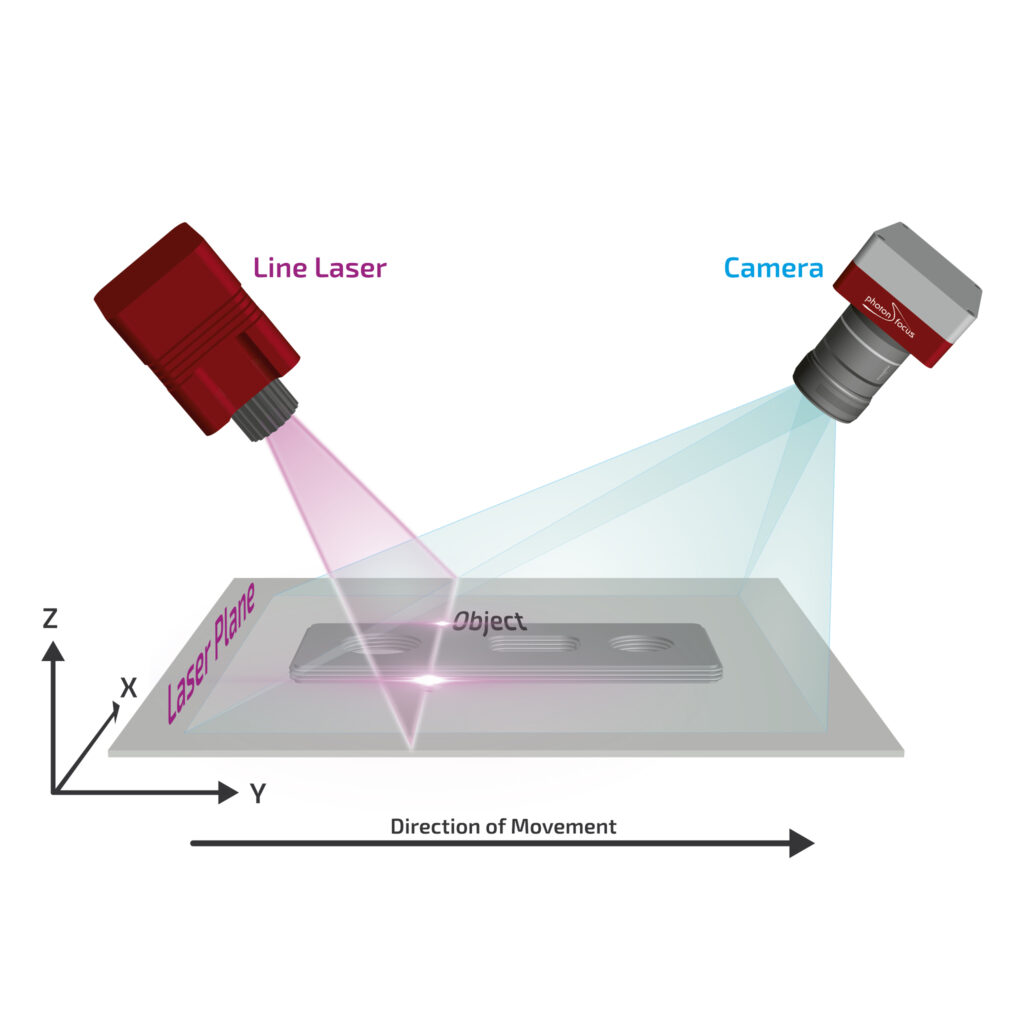
Laser triangulation is one of the most important methods in industrial 3D metrology. A projected laser line is captured by the camera, and precise elevation profiles and 3D data are calculated from it. Photonfocus combines high-resolution CMOS sensors, HDR technologies, and FPGA-based real-time processing to achieve reliable measurement results even on reflective or low-contrast surfaces. Special LineFinder algorithms enable subpixel-accurate detection of laser profiles while simultaneously reducing the processing load on the image processing system.
Contact an expert now.
We’ll help you choose the right industrial camera.
Phone: +41 55 451 00 00 Get in touch